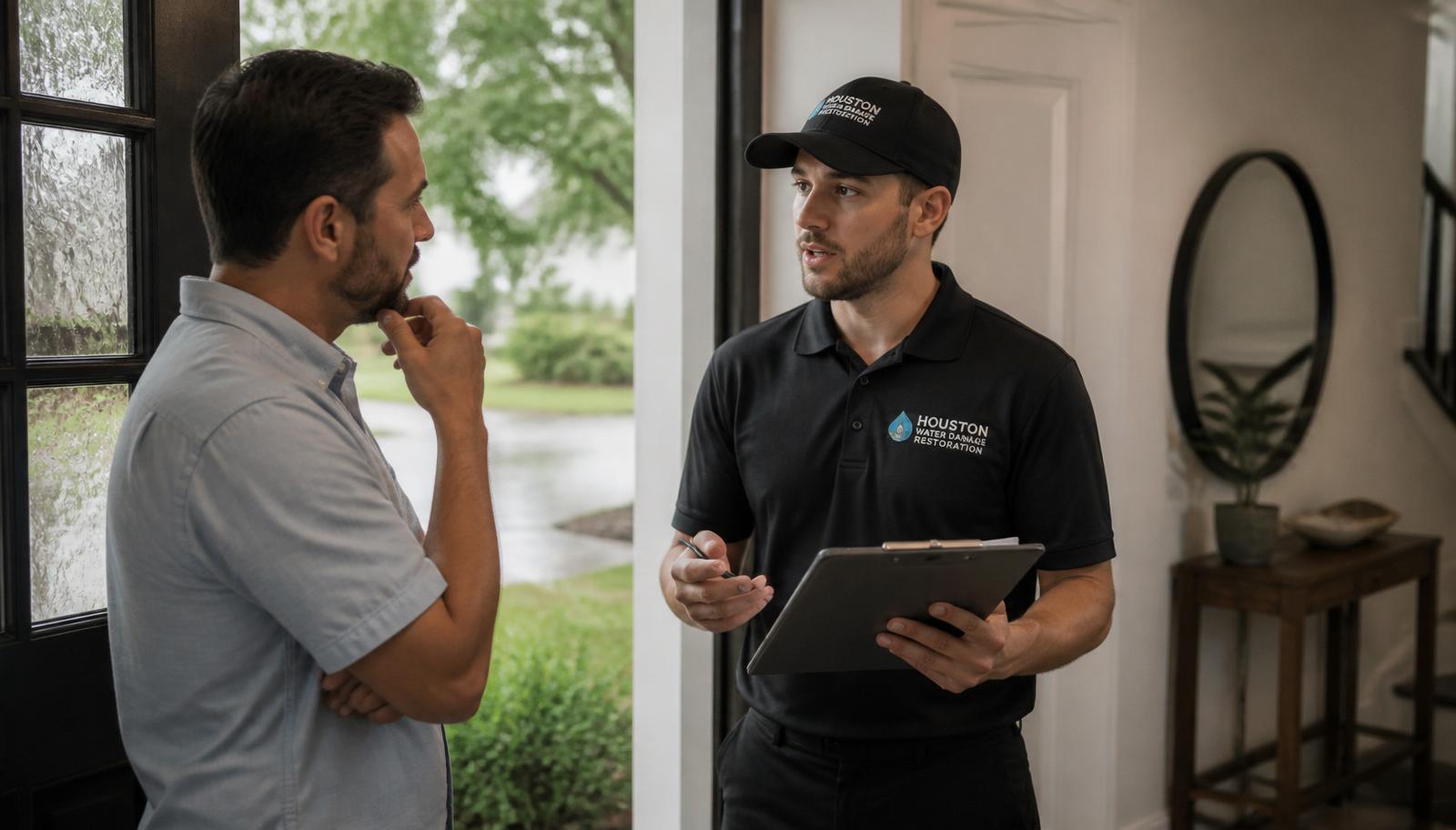
Water Damage and Flood Damage Help in Houston, TX
Houston water damage can happen quickly when heavy rain, bayou overflow, street flooding, roof leaks, plumbing backups, or drainage problems push water into a home. Whether water entered through a doorway, garage, wall, ceiling, slab edge, or plumbing system, the first step is safety. HSRC helps Houston homeowners understand what to do next and get connected with local licensed water damage restoration contractors.
HSRC helps connect homeowners with independent local service providers. HSRC does not perform home services directly, set contractor pricing, verify every provider's licensing status in real time, or guarantee availability, response times, service outcomes, or insurance coverage.
- Houston heavy rain can overwhelm drainage and cause water to enter homes quickly.
- Bayou-area flooding, street flooding, roof leaks, and plumbing backups can create different cleanup concerns.
- Standing water may be contaminated, especially after flood events or sewer backups.
- Mold risk can increase when wet materials remain damp, especially in Houston's humid climate.
- Documentation matters before cleanup when it is safe to take photos and videos.
- HSRC helps Houston homeowners get connected with local licensed water damage restoration contractors.
Why Houston Homes Are Vulnerable to Water Damage
Houston's geography, rainfall patterns, bayous, flat terrain, and rapid development can make water movement difficult during heavy storms. In one neighborhood, water may drain quickly. A few miles away, low streets, blocked drainage, or bayou overflow can push water toward garages, slab edges, crawlspaces, and first-floor living areas.
Houston homes can also experience water damage from roof leaks, failed flashing, clogged gutters, plumbing leaks, appliance failures, sewer backups, and wind-driven rain. After a storm, the visible water may only be part of the issue. Moisture can remain behind baseboards, under flooring, inside cabinets, behind drywall, or in insulation.
What to Do First After Flooding in Houston
If water enters your home, do not rush into the affected area. First, consider whether the water may be contaminated or whether electricity could be present. If there is immediate danger, contact emergency services or local authorities.
If it is safe:
- Take photos and videos before moving items.
- Capture the water line on walls, doors, cabinets, and furniture.
- Move dry valuables away from affected areas.
- Avoid using electrical devices in wet rooms.
- Do not pull up flooring or remove drywall before documenting unless safety requires it.
- Contact your insurer if you plan to file a claim.
- Request water damage help if water is spreading, standing, or affecting walls, floors, cabinets, or ceilings.
Common Houston Water Damage Scenarios
Houston homeowners may see water damage after:
- Tropical downpours
- Slow-moving thunderstorms
- Bayou or drainage overflow
- Street flooding
- Wind-driven rain
- Roof leaks
- Garage flooding
- Water entering under exterior doors
- Plumbing backups during heavy rain
- Water heater leaks
- Appliance leaks
- Sewage backups
- Moisture trapped after a storm
Mold and Moisture Concerns in Houston
Houston's humidity can make water damage more complicated. Wet drywall, carpet, wood flooring, cabinets, insulation, and baseboards may hold moisture even after the surface looks dry.
Mold risk can increase when materials stay damp for 24 to 48 hours or longer, depending on humidity, temperature, material type, ventilation, and contamination. Homeowners should avoid disturbing suspected mold if they are not trained. A qualified contractor can evaluate moisture levels, drying needs, and cleanup options.
What Water Damage Restoration May Include
Depending on the source and severity of water damage, a restoration contractor may evaluate:
- Water extraction
- Moisture mapping
- Drying and dehumidification
- Removal of unsalvageable wet materials
- Cleaning and sanitizing where appropriate
- Mold prevention or mold evaluation
- Odor concerns
- Documentation support
- Follow-up moisture checks
The exact process depends on the source of water, contamination level, affected materials, and provider.
Questions to Ask a Houston Water Damage Contractor
- What areas of the home appear affected?
- Is the water clean, gray, or potentially contaminated?
- What materials may need to be removed?
- How will moisture be measured?
- How long could drying take?
- Are cabinets, flooring, drywall, or insulation affected?
- Is mold evaluation recommended?
- What documentation can be provided for insurance?
- What work is included in the estimate?
- What is not included?
Need Water Damage Help in Houston?
If your home has standing water, wet floors, roof-leak damage, storm water intrusion, or moisture after flooding, HSRC can help you take the next step and get connected with a local licensed water damage restoration contractor.
Houston FAQ — Water Damage and Flood Damage Help
What should I do first after flooding in Houston?
Focus on safety. Avoid standing water if electricity, sewage, chemicals, or structural damage may be involved. If it is safe, document damage with photos and videos, move dry valuables away from affected areas, and request water damage help.
Is flood water in Houston homes contaminated?
It can be. Flood water may contain sewage, chemicals, debris, or other contaminants, especially after street flooding, bayou overflow, or sewer backups. Avoid contact with questionable water and ask a qualified contractor about cleanup needs.
Can Houston humidity increase mold risk after water damage?
Yes. Moisture left in drywall, flooring, cabinets, insulation, or baseboards can increase mold risk, especially in humid conditions. Risk depends on how long materials stay wet, temperature, ventilation, contamination, and material type.
Should I document water damage before cleanup?
Yes, when it is safe. Take photos and videos of water levels, affected rooms, damaged belongings, flooring, walls, cabinets, ceilings, and exterior drainage. Ask your insurer what documentation is required.
Does HSRC perform water damage restoration directly?
No. HSRC provides homeowner-friendly information and helps connect Houston homeowners with independent local service providers. HSRC does not perform restoration work directly or guarantee pricing, availability, licensing, response times, or insurance coverage.
Marcus “Marc” Calder
Houston Home Services Editorial Contributor
Marcus “Marc” Calder contributes Houston-focused homeowner education for HSRC. His local coverage focuses on Gulf Coast weather, heavy rain, bayou-area flooding, high-humidity HVAC issues, roof and drainage concerns, solar readiness, and practical questions Houston homeowners should ask before requesting service help.
Editorial note: Contributor profiles are used for local editorial perspective. HSRC helps connect homeowners with independent local service providers. HSRC does not perform home services directly, set contractor pricing, verify every provider's licensing status in real time, or guarantee availability, response times, service outcomes, or insurance coverage.